Vendor control for multi-office law firms
Bring renewal timing, ownership, and spend into one working record.
Firmfact is a vendor control system for multi-office law firms. It gives COOs, finance leaders, and operations teams a clearer operating layer for vendor commitments, so notice periods, named owners, and financial exposure stay visible while decisions can still be made with control.
Use the walkthrough for an active renewal problem. Use the checklist when you are still building the internal case.
Key takeaways
What law firm leadership should know first
What Firmfact is
A vendor control system for multi-office law firms that brings renewal timing, ownership, spend context, and source documents into one working record.
Who it helps
COOs, finance leaders, operations teams, and local stakeholders who need a clearer view of vendor commitments across offices and teams.
When it matters
Before notice periods close, auto-renewals roll forward, or budget assumptions harden around incomplete information.
See the vendor renewal control use case if notice periods and renewal deadlines are the immediate issue.
- Built for multi-office law firms with distributed ownership.
- One working record for renewals, owners, spend, and source documents.
- A practical first review before rollout planning starts.
The blind spot
Firms rarely lose control in one moment. They lose it between the contract and the decision.
The problem is usually not missing data. It is missing structure at the point where timing, ownership, and spend need to be reviewed together.
Notice periods live in contracts, but decisions are often carried through inboxes, meetings, and memory.
Ownership sits across offices, finance, operations, IT, and local buyers instead of one accountable record.
Budget pressure shows up after commitments harden rather than while there is still time to review options.
The system
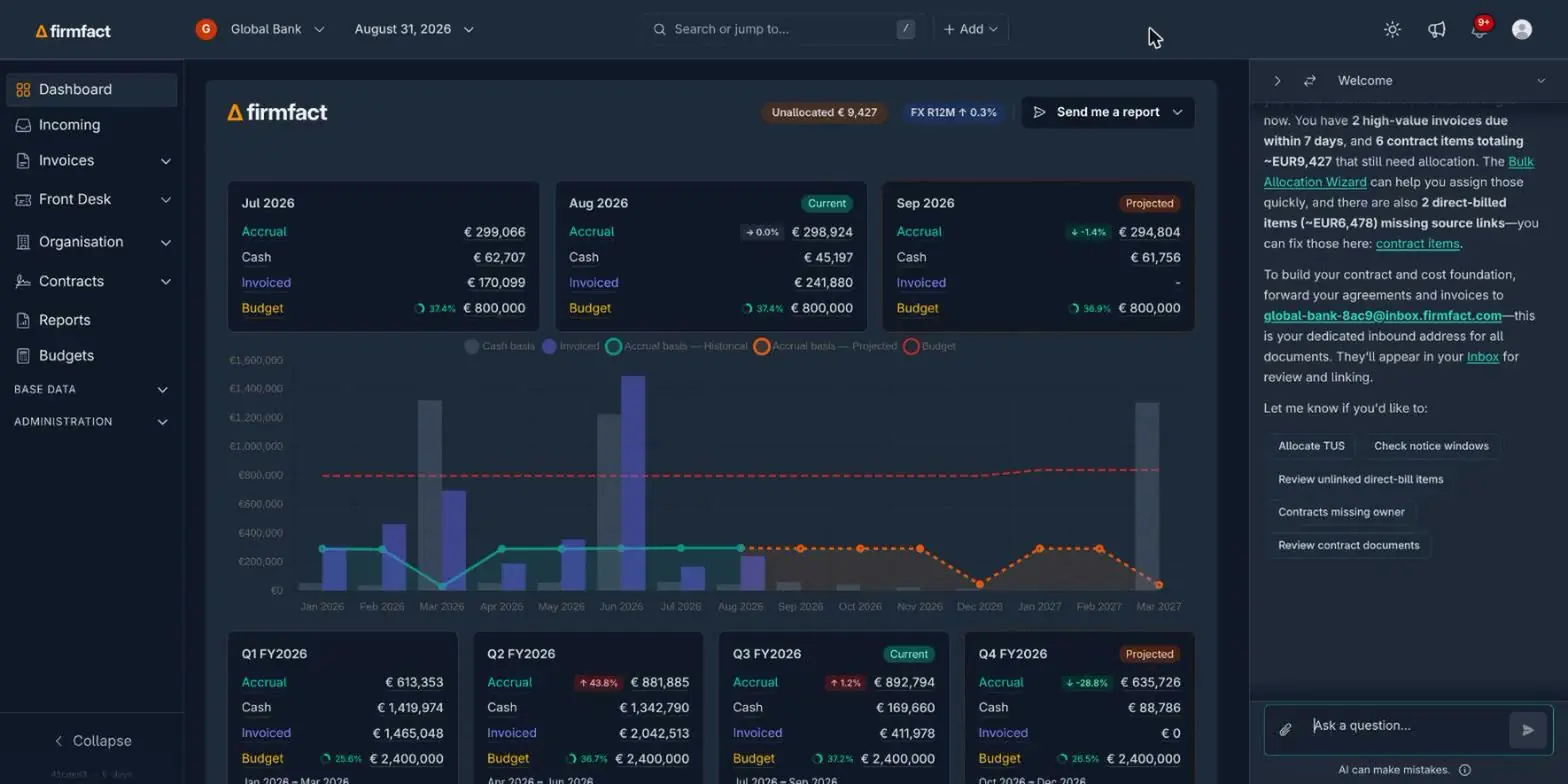
One control surface for records, renewal timing, and spend visibility.
The point is not more vendor data. The point is a shared operating layer that keeps the commitment visible before the renewal window closes and before the budgeting cycle hardens.
Operating record
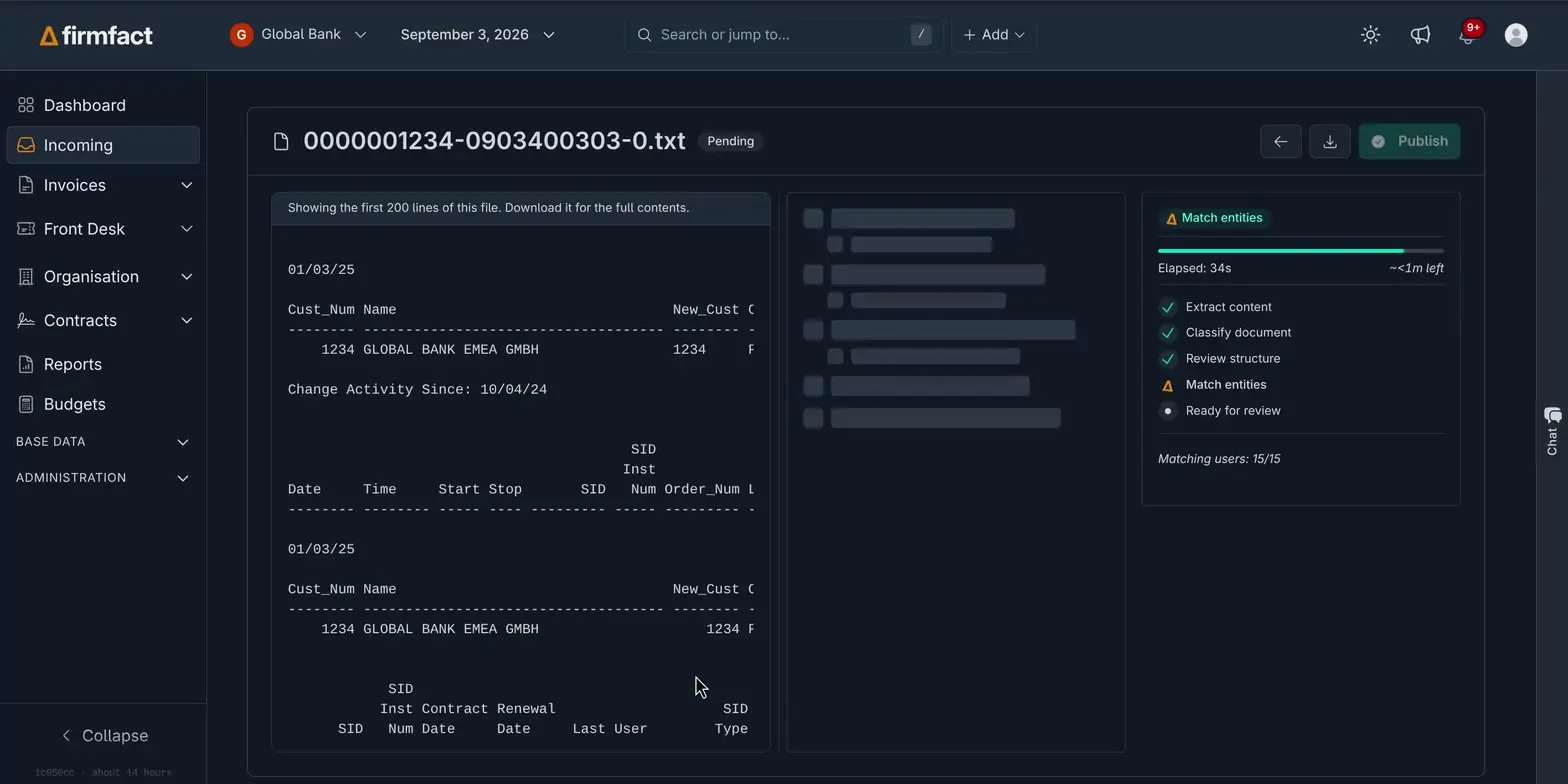
A single working surface for agreements, owners, spend, and review state.
Operating record
Keep contract timing, named ownership, spend context, and source documents in one working layer.
Renewal control
Review what is approaching before notice periods close or auto-renewals become the default outcome.
Spend visibility
Tie the same record into budgeting, office scope, and chargeback conversations without rebuilding context.
Review state
Track what has been checked, what is unresolved, and what needs a decision next.
How the review starts
Practical confidence should be available before a deeper commitment.
The early work should show what needs attention, who needs to be involved, and what a controlled rollout would actually include.
01
Map the current path
Start with the agreements, notice periods, and approval path you already have.
02
Define the working record
Set the ownership model, spend context, and review state that should be visible in one place.
03
Scope rollout deliberately
Confirm office coverage, access structure, and implementation boundaries before deeper commitment.
FAQ
Questions law firms usually ask before they commit.
The first questions are usually about ownership, timing, existing systems, and whether the firm can get control before rollout becomes a larger program.
What does Firmfact help a law firm control?
Firmfact helps multi-office law firms control vendor renewals, contract ownership, spend exposure, and review status in one working record.
Who is Firmfact for inside the firm?
It is built for law firm COOs, finance leaders, operations teams, and anyone coordinating vendor ownership across offices, practices, or support functions.
Do we need to replace our finance or contract systems first?
No. The first step is usually a clearer operating layer around live agreements, owners, notice periods, and spend context before wider systems change.
When should a firm review vendor renewals?
The review is most useful before notice periods narrow the decision, while the firm still has time to confirm ownership, compare options, and understand budget impact.
Next step
Review the renewal problem before it becomes an automatic decision.
Book a walkthrough if the issue is already live, or take the checklist first if you are still building the internal case.